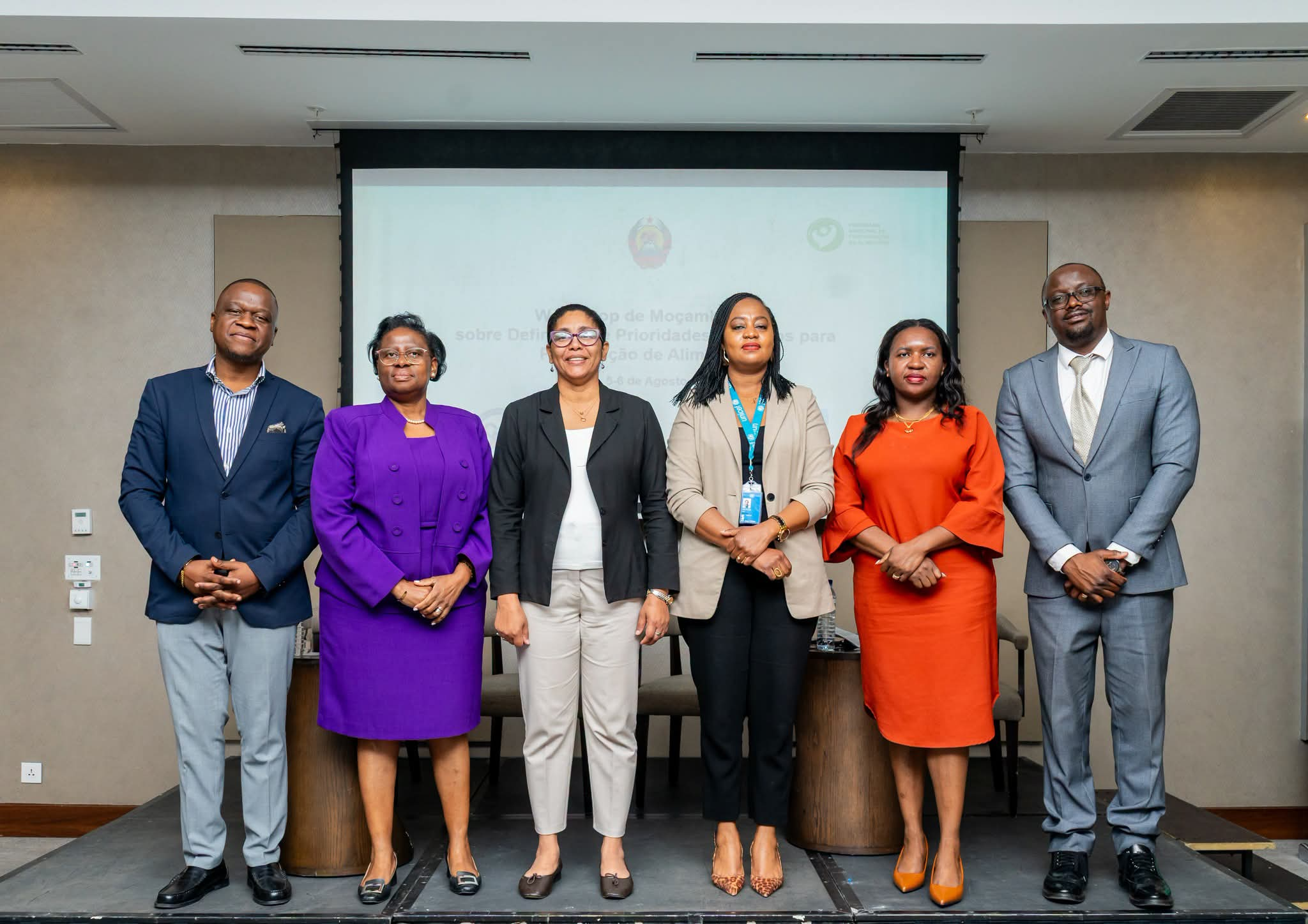
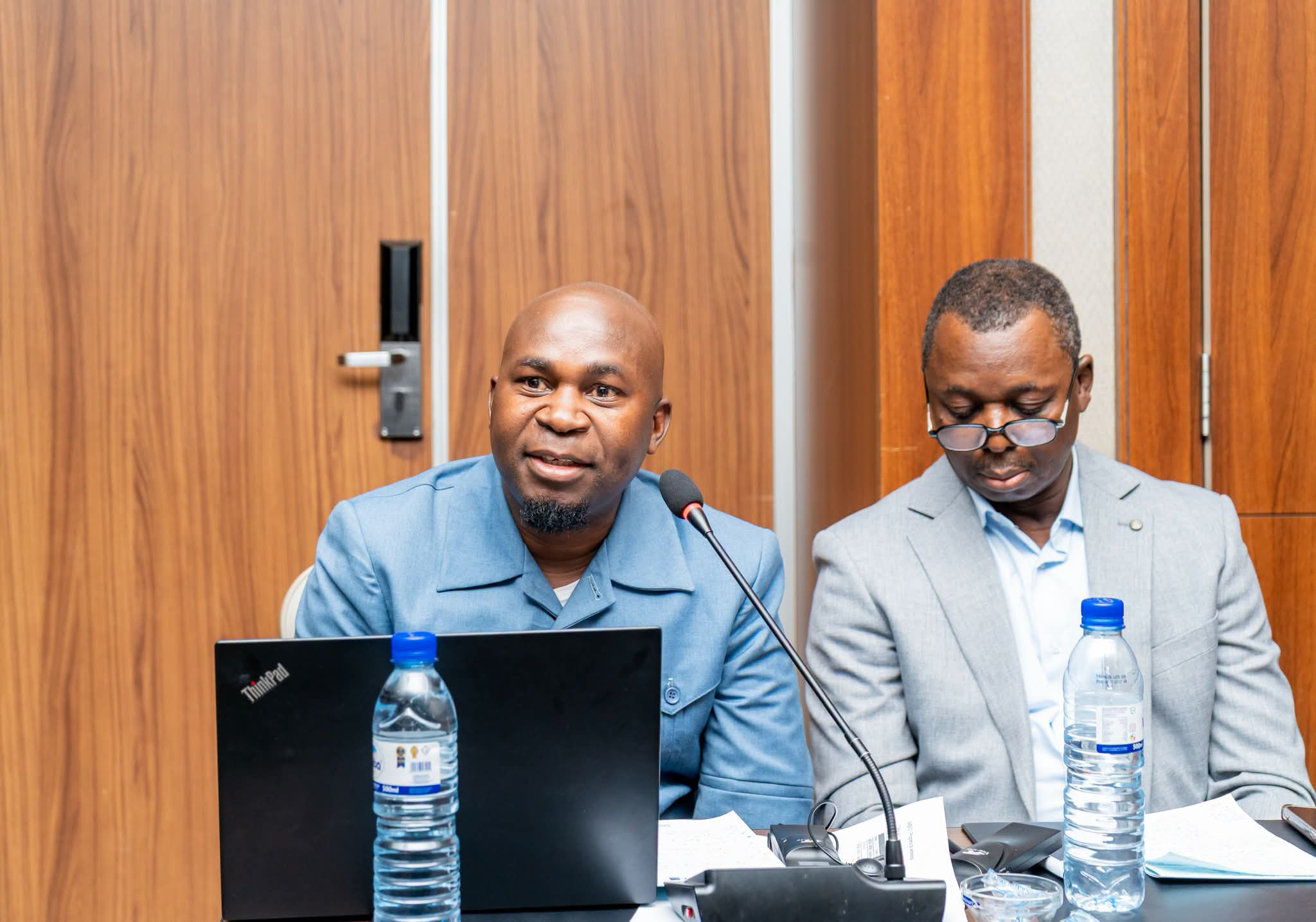
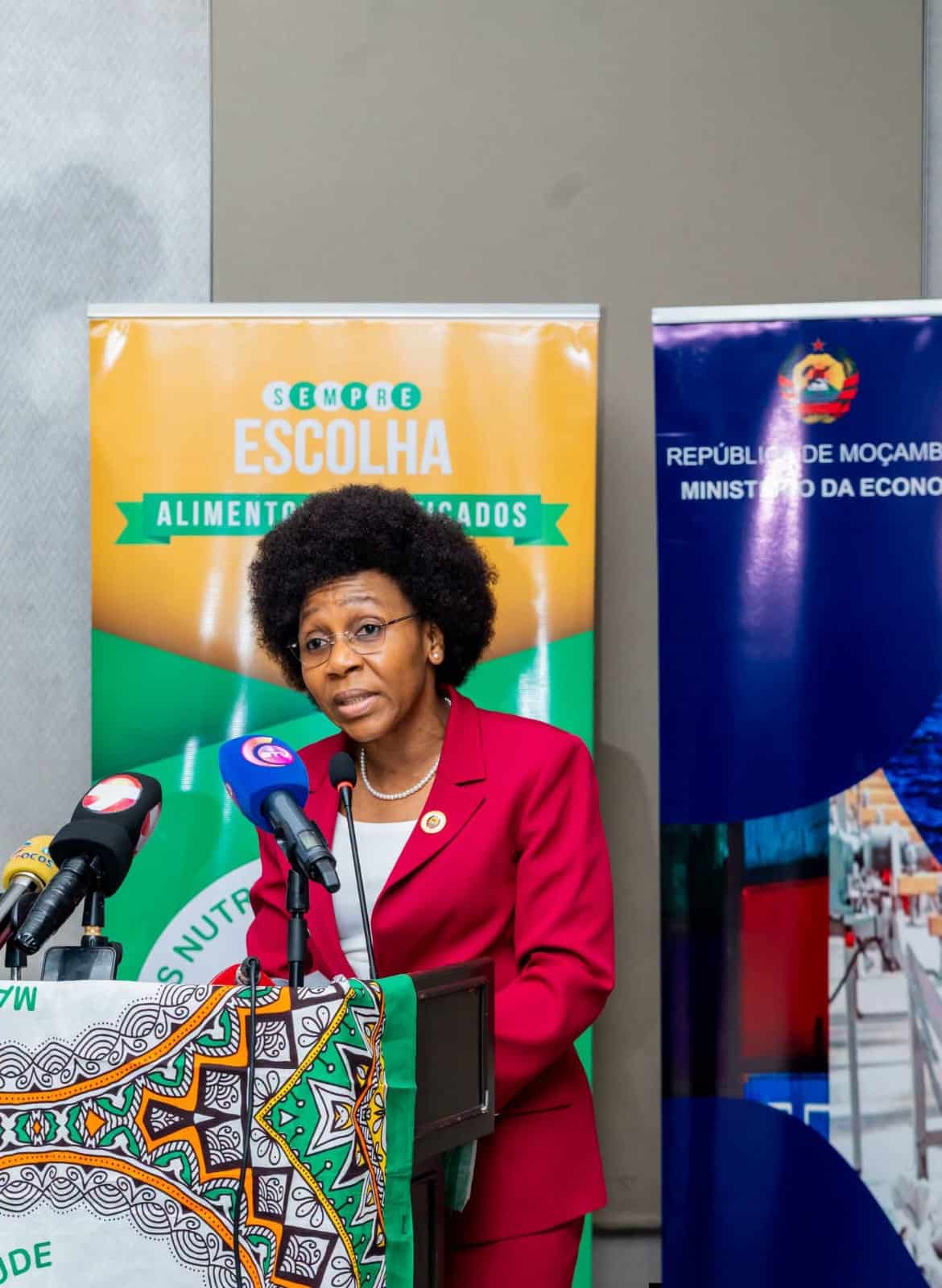
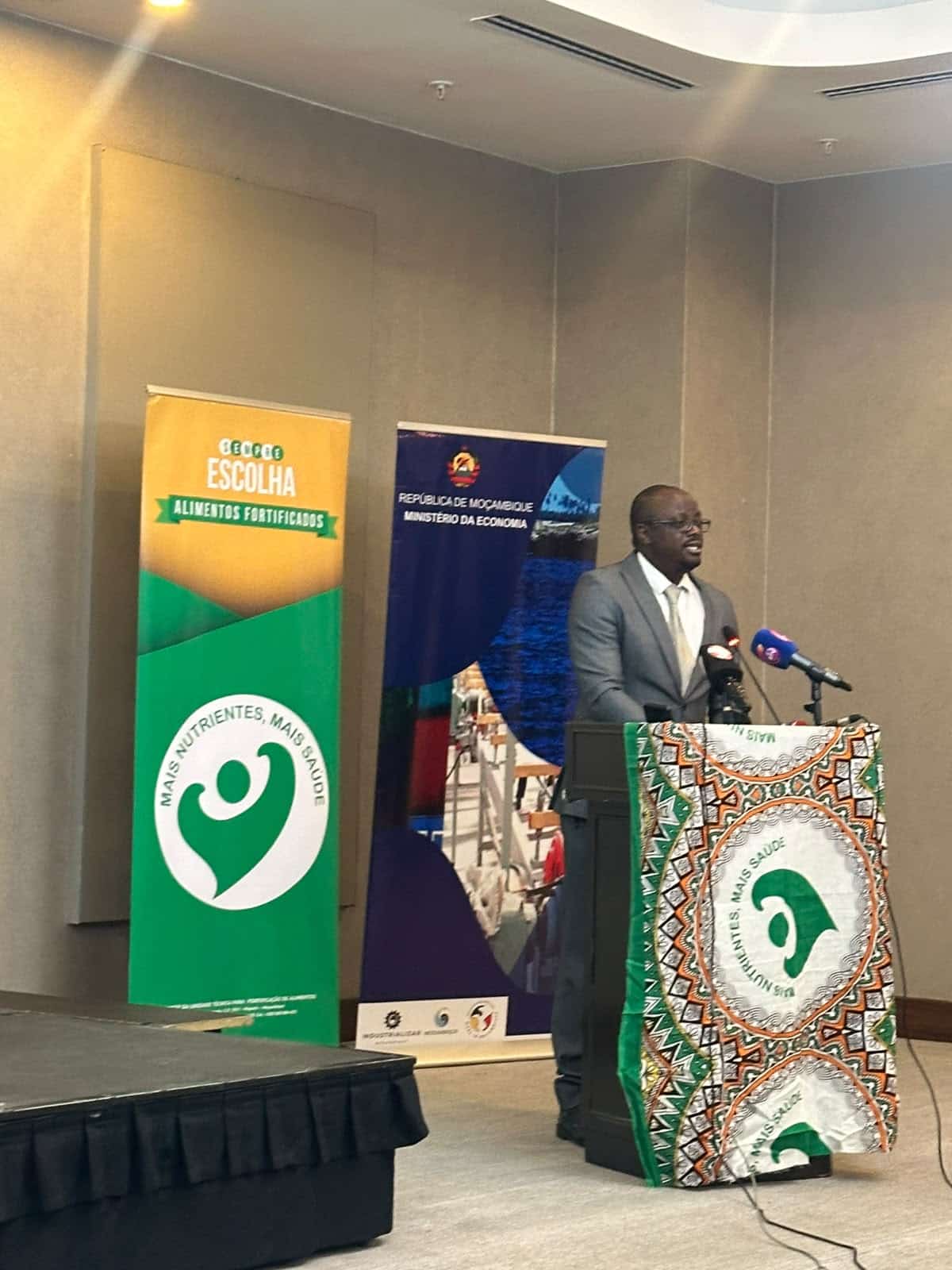
Mozambique's Data for Action in Food Fortification Workshop
Mozambique strengthens its data systems for large-scale food fortification
National stakeholders agreed on a core set of fortification indicators, began refining a national data dashboard, and identified priority actions to strengthen laboratory capacity, data governance and the monitoring of small-scale producers.
Workshop details
Event: Mozambique Large-Scale Food Fortification Data Workshop: Strengthening Data Systems for Evidence-Based Decision-Making
Date and location: 5–6 August 2026 | Maputo, Mozambique
Participation: 520 participants representing government institutions, regulatory and standards bodies, laboratories, large- and small-scale food producers, premix suppliers, development partners, academia and civil society
Building a stronger foundation for action
As a follow-up to the October 2025 Africa Regional Dialogue on Data for Action in Food Fortification, the Ministry of Economy, through the National Committee for Food Fortification (CONFAM), convened a two-day in-person workshop. It was held in collaboration with the Southern African Development Community (SADC) Secretariat and the East, Central and Southern Africa Health Community (ECSA-HC) under the ESA RCM, alongside DInA, UNICEF and other partners. The workshop focused on strengthening Mozambique’s large-scale food fortification (LSFF) data value chain so that timely, reliable evidence can inform program, regulatory and industry decisions.
The first day built a shared understanding of the national LSFF data landscape. Participants reviewed Fortify-MIS and a proposed KoboToolBox and Power BI dashboard for collecting, validating and visualizing inspection, industry, laboratory and monitoring data. On the second day, participants traced data needs along the fortification impact pathway, from production and premix supply through laboratory analysis, trade, household consumption and nutritional status.
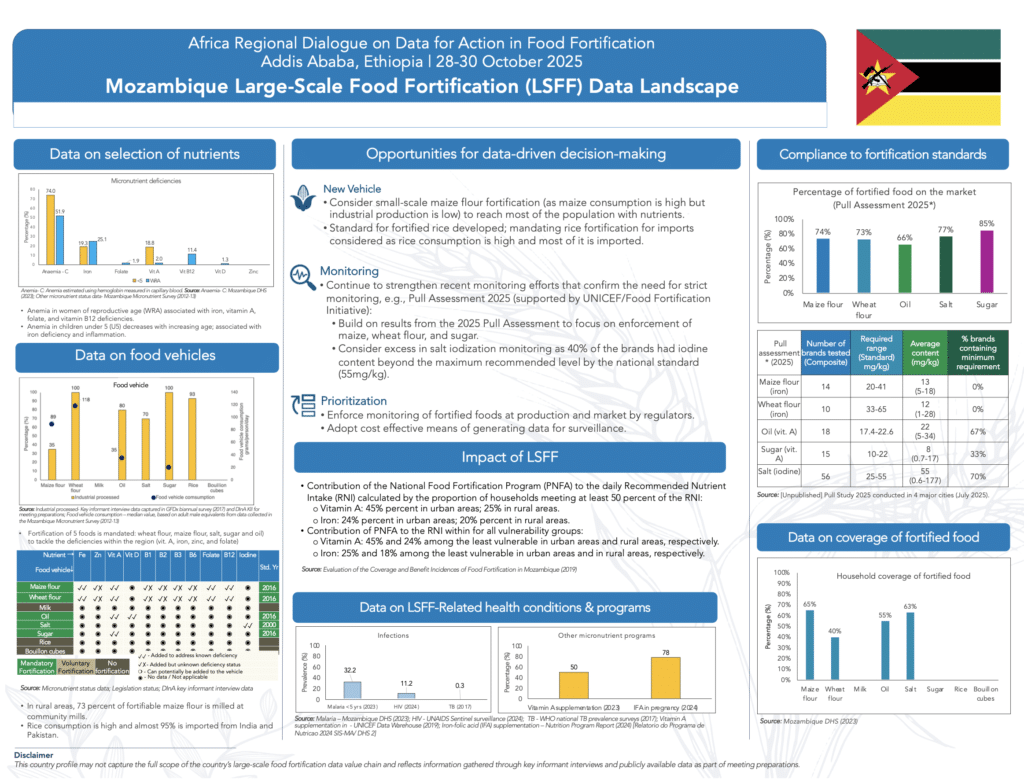
Prior to the October 2025 Africa Regional Dialogue on Data for Action in Food Fortification, country delegates from Tanzania created this LSFF data landscape, with information on: the available and accessible national level LSFF- related data, who owns the data, how data are shared and used, and country-specific opportunities for filling data gaps.
Workshop achievements and LSFF data-focused priority actions
The workshop participants reached consensus on developing a nationally owned LSFF dashboard linked to relevant information systems. However, persistent challenges remain including fragmented data ownership, weak routine reporting and feedback, limited laboratory and inspection capacity outside major centres, difficulty capturing reliable information from small mills and salt producers, and insufficient financing and connectivity for sustained digital reporting.
Participants emphasized that existing systems should be connected and strengthened rather than duplicated. They also stressed that a smaller, validated set of indicators is more practical than a complex reporting framework.
CONFAM will consolidate the workshop recommendations and circulate them for stakeholder validation. Relevant institutions will nominate focal points and submit priority indicators and datasets. Progress will be tracked through quarterly coordination meetings, pilot reports, dashboard updates and annual workplan reviews, with continued support from SADC and development partners.pa
Five priorities for focused implementation
Validate a core LSFF indicator set and define data governance, validation, access and disclosure protocols, led by CONFAM and the Ministry of Economy.
Refine and pilot the KoboToolBox and Power BI dashboard using existing data, then progressively integrate it with priority national information systems.
Strengthen laboratory capacity and standardize reporting across national laboratories, standards bodies and regulators.
Improve monitoring of small maize mills and salt producers to extend fortification coverage to vulnerable populations.
Institutionalize periodic multi-stakeholder data reviews, industry feedback and evidence briefs, and promote harmonized regional standards and monitoring of imports and donated foods.